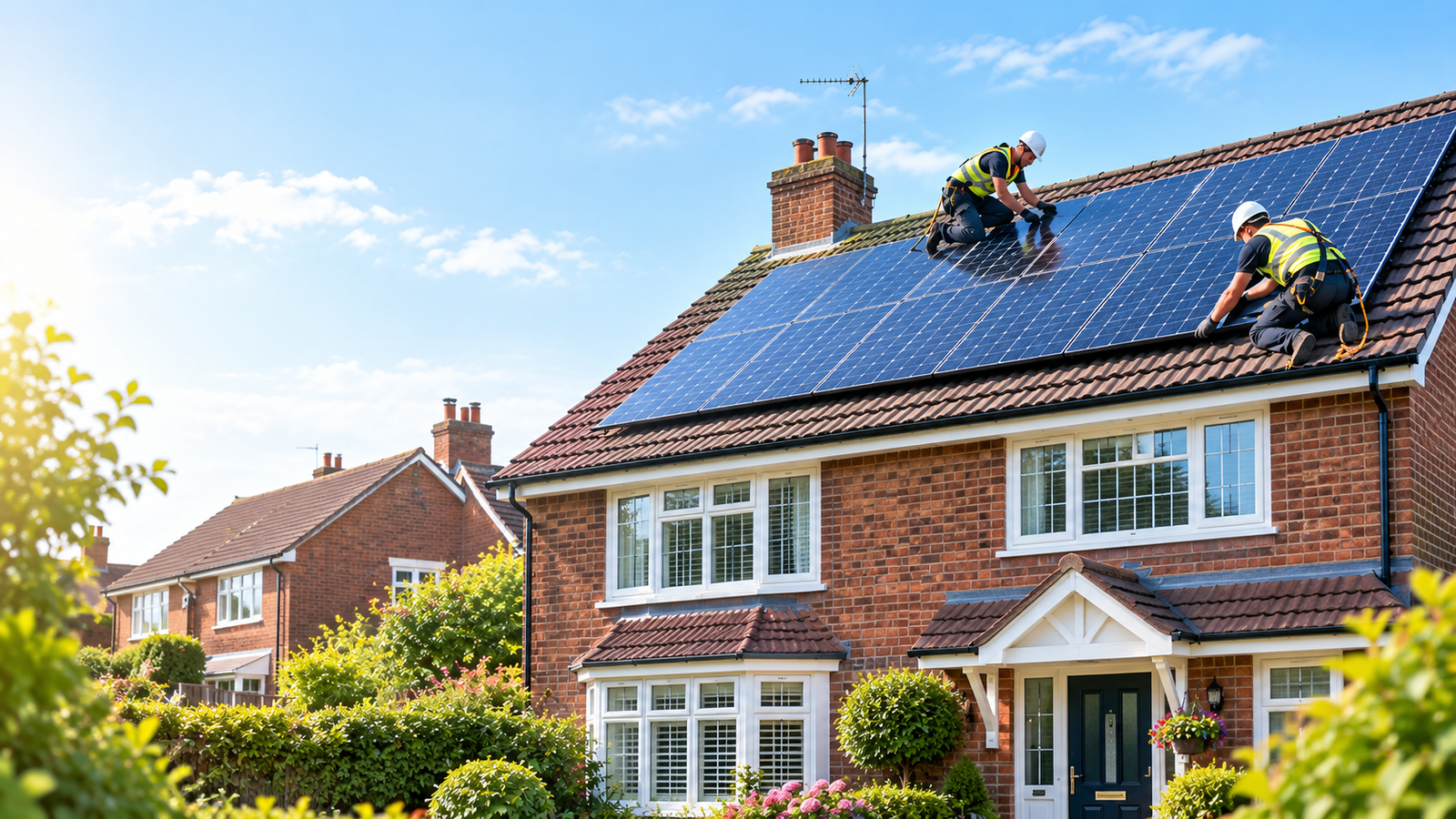
As the cost of energy in the home remains a big concern for UK homeowners, many are seeking ways to reduce their dependence on grid electricity. Solar panels can help you generate renewable electricity at home, which can reduce the amount of electricity you need to buy from your energy supplier.
But how much can you really save on?
The answer depends on a number of factors including your home electricity consumption, your solar system size, roof orientation, shading, electricity prices and how much of the electricity you generate is used by you.
In this guide we take a look at the potential savings solar panels UK homeowners could make, and the things that can affect your overall return.
How Do Solar Panels Reduce Your Energy Bills?
Solar panels harvest electricity from sunlight and convert it into electricity you can use in your home.
If your panels are producing electricity, then your home can use that electricity instead of buying the same amount of electricity from the grid.
For instance, electricity generated during daylight can be used to run appliances such as:
• Washers
• Dishwashers
• Fridges
• lights
• Calculators
• Television Sets
• Electric heating system
• Electric vehicle chargers
The more electricity you consume from what you produce, the less you may have to buy from the grid.
This is called self-consumption and is a big consideration when considering potential solar panel savings.
How Much Can Solar Panels Save in the UK?
There is not one savings number that fits all households.
A house with high electricity demand may use more of the solar generation, while a house that is often empty during the day may export more of its generated electricity.
Your potential savings could be based on:
• Size of the solar system
• Yearly electricity consumption
• Roof slope and direction
• Shadow
• Weather local
• Unit charges for electricity
• How much electricity you use in daylight
• If you happen to own a solar battery
• Whether you will export excess electricity
That means two homes with the same solar panel systems can have different savings.
Using More of Your Solar Electricity
One of the easiest ways to increase solar panel savings UK homeowners can achieve is to use more of the electricity produced by the system.
Your electricity usage patterns can make a difference . Solar generation is generally highest during daylight hours.
You could, where possible, consider running some appliances when your solar panels are producing electricity.
For example, you might want to use your washing machine or dishwasher during the day rather than later in the evening.
An energy monitoring system can also help you understand when your home is producing and consuming electricity.
Can a Solar Battery Increase Your Savings?
A solar battery can store excess electricity produced by your panels so that it can be used later.
Any electricity your home does not use immediately may be exported to the grid (depending on your export arrangements) without battery storage.
Instead of this, you can store the extra electricity in a battery to use when your solar panels are producing less energy.
For example, electricity generated in the afternoon could be stored and used in the evening when household electricity demand increases;
This can help households to better use their own solar generation.
But whether a battery is financially worthwhile depends on your individual circumstances, including your energy usage, solar generation and battery cost.
What Happens to Excess Solar Electricity?
Your solar panels may sometimes generate more electricity than your home needs.
Rather than allowing that electricity to go unused, eligible households can potentially export surplus electricity to the grid through an export tariff.
The Smart Export Guarantee (SEG) provides a framework through which participating electricity suppliers pay eligible small-scale generators for electricity exported to the grid.
Export payments can therefore form another part of the overall financial benefit of a solar PV system.
When assessing potential savings, it is useful to consider both the electricity you avoid purchasing and any income you may receive from exporting surplus generation.
Factors That Affect Solar Panel Savings
1. Your Electricity Consumption
A household that uses more electricity may have greater potential to benefit from solar generation.
However, the timing of your electricity usage also matters. Using electricity when your panels are generating can increase self-consumption.
2. Your Roof Orientation
Roof orientation can influence how much sunlight your panels receive throughout the day.
South-facing roofs are traditionally considered favourable for solar generation in the UK, but east- and west-facing systems can also be suitable depending on the property and the household’s energy-use pattern.
3. Shading
Trees, chimneys, neighbouring buildings and other obstructions can reduce solar generation.
A professional installer should assess potential shading as part of the system design.
4. System Size
A larger solar PV system can generate more electricity, but the appropriate size depends on your roof space, electricity usage and objectives.
Simply installing the largest possible system is not necessarily the most suitable approach.
5. Electricity Prices
The value of the electricity generated by your solar panels is influenced by the price you would otherwise pay for electricity from the grid.
Changes in electricity tariffs can therefore affect the financial benefits of solar.
6. Your Energy Usage Habits
Your daily routine can have a significant impact on how much of your solar electricity you use directly.
If most of your electricity consumption occurs in the evening, battery storage may be worth considering as part of your overall system.
How Long Does It Take to Recover the Cost of Solar Panels?
The time required to recover the initial investment is often referred to as the solar panel payback period.
There is no universal payback period because installation costs, system performance, household electricity consumption, electricity prices and export payments vary between homes.
A properly designed solar system can continue generating electricity for many years, which means homeowners should consider the longer-term benefits rather than focusing only on the initial installation cost.
When reviewing a solar quotation, ask the installer to explain how their estimated savings and payback figures have been calculated.
How to Maximise Your Solar Panel Savings
There are several practical ways homeowners can make better use of their solar generation:
- Use high-energy appliances during daylight hours where practical.
- Monitor your electricity generation and consumption.
- Consider battery storage if it suits your household’s energy requirements.
- Compare available electricity and export tariffs.
- Avoid unnecessary electricity consumption.
- Choose a correctly sized solar PV system.
- Make sure your system is professionally designed and installed.
- Keep an eye on system performance after installation.
Small changes to how and when you use electricity can make a difference to how much of your solar generation is consumed at home.
Is Solar Worth Considering for Your Home?
Solar panels can provide UK homeowners with a way to generate renewable electricity at home and reduce their reliance on grid electricity.
However, the potential solar panel savings UK homeowners can achieve will vary from property to property.
The best way to understand your potential savings is to assess your home’s electricity consumption, roof characteristics, available space and likely solar generation before choosing a system.
At Solar Prime Energy, we help homeowners explore solar panel and battery storage options designed around their individual energy requirements. From system design and installation to commissioning and handover, our team can help you understand how solar could work for your home.
If you are considering solar panels and want to understand your potential savings, contact Solar Prime Energy for a free quote and discuss your requirements with our team.